Introduction: Why ECE Still Powers the World
Imagine waking up one morning and realizing your mobile phone doesn’t work, the internet is down, GPS fails, and even smart traffic signals stop responding. Sounds chaotic, right?
Behind all these everyday technologies is one powerful discipline — Electronics and Communication Engineering (ECE).
As we step into a technology-driven era, students and parents often ask:
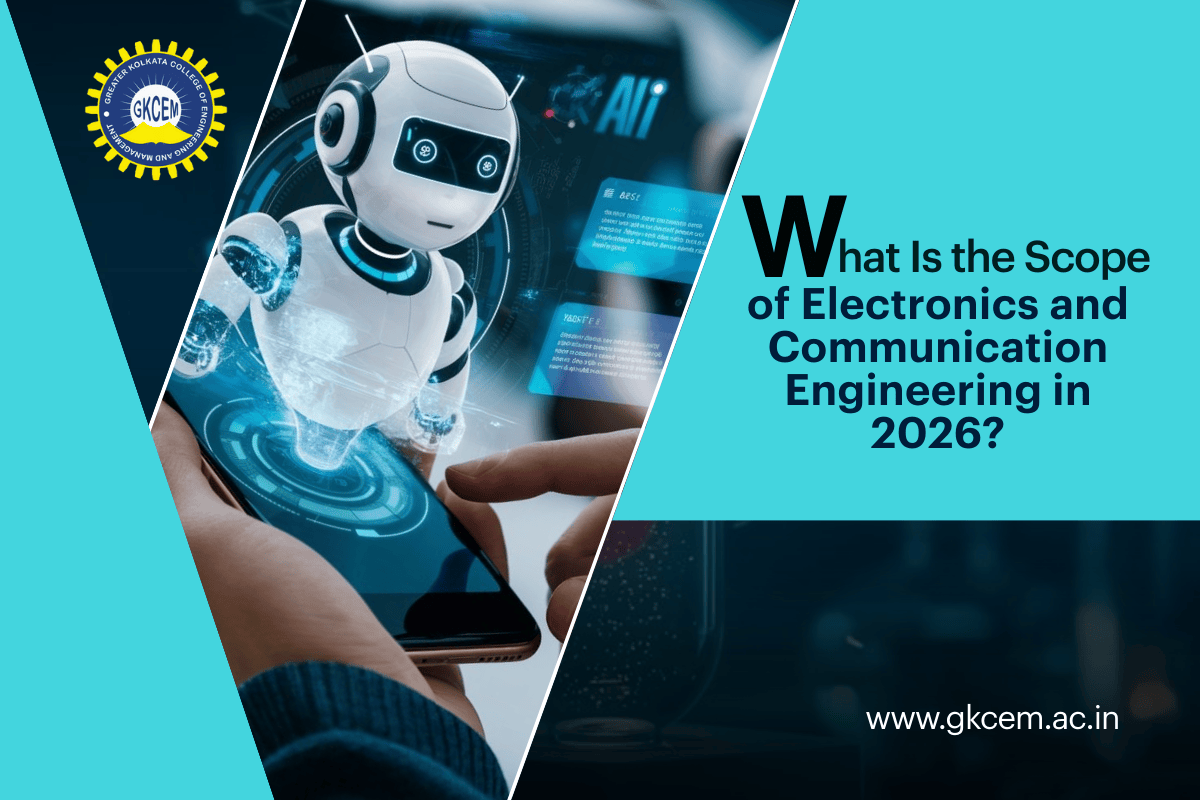
“What is the scope of Electronics and Communication Engineering in 2026?”
The short answer: It’s broader, smarter, and more future-proof than ever.
In this blog, we’ll break it down in simple language — career scope, future trends, salary insights, required skills, and why choosing the right engineering college in Kolkata, West Bengal matters.
What Is Electronics and Communication Engineering (ECE)?
Electronics and Communication Engineering focuses on designing, developing, and maintaining:
- Electronic devices
- Communication systems
- Embedded systems
- Wireless networks
- Signal processing technologies
ECE engineers make modern life possible — from smartphones and satellites to medical equipment and smart cities.
Scope of Electronics and Communication Engineering in 2026
The scope of electronics and communication engineering is expanding rapidly due to digital transformation across industries.
Why ECE Is Future-Ready
By 2026, ECE will play a critical role in:
- 5G & 6G communication
- Artificial Intelligence (AI) hardware
- Internet of Things (IoT)
- Electric Vehicles (EVs)
- Smart healthcare devices
- Defense & space technology
According to Statista and ITU reports, global demand for electronics and telecom professionals is expected to grow by 8–10% annually.
Key Industries Hiring ECE Engineers in 2026
1. Telecommunications & Networking
- 5G / 6G network deployment
- Optical fiber communication
- Satellite communication
2. Semiconductor & Chip Design
- VLSI (Very Large Scale Integration)
- IC design & fabrication
- Hardware acceleration for AI
3. IT & Software Sector
- Embedded software development
- IoT application development
- AI/ML system integration
4. Electric Vehicles & Automation
- Power electronics
- Battery management systems
- Automotive electronics
5. Healthcare & Medical Electronics
- Diagnostic devices
- Wearable health tech
- Biomedical signal processing
Career Options After ECE (2026 Updated)
Here are popular and emerging roles for ECE graduates:
- Electronics Design Engineer
- Communication Engineer
- VLSI Engineer
- Embedded Systems Developer
- Network Engineer
- Robotics Engineer
- IoT Solutions Architect
- AI Hardware Engineer
- Defense & PSU Technical Officer
Real-Life Example:
ECE graduates today are working in companies like ISRO, DRDO, Qualcomm, Intel, Samsung, TCS, Infosys, and Tesla.
Salary Insights for ECE Engineers in India (2026)
| Experience Level | Expected Salary (₹/Year) |
| Fresher | ₹4 – 6 LPA |
| 3–5 Years | ₹8 – 12 LPA |
| VLSI / AI Roles | ₹15 – 25+ LPA |
| Abroad | ₹30 – 50+ LPA |
Source: Industry salary trends from NASSCOM, Glassdoor, and Payscale.
Pros & Cons of Choosing ECE
| Pros | Cons |
| Wide career options | Requires continuous learning |
| Core + IT opportunities | Some concepts are math-intensive |
| High demand globally | Practical skills are essential |
| Strong future scope | Not just theory-based |
Future Trends Shaping ECE in 2026
🔹 Top ECE Trends to Watch
- AI-powered communication systems
- Edge computing & smart devices
- Green electronics & sustainable tech
- Quantum communication
- Autonomous systems
These trends ensure the scope of electronics and communication engineering stays strong for the next decade.
Top Skills Required for ECE Students in 2026
Technical Skills
- Digital & Analog Electronics
- Embedded C / Python
- VLSI & FPGA basics
- Networking concepts
- IoT platforms
Soft Skills
- Problem-solving
- Logical thinking
- Team collaboration
- Communication skills
Step-by-Step Guide: How to Start a Career in ECE
Step 1: Choose a reputed B.Tech college
Step 2: Build strong fundamentals
Step 3: Learn coding + hardware integration
Step 4: Do internships & live projects
Step 5: Get certified (IoT, VLSI, AI basics)
Step 6: Apply for core or tech roles
Choosing a top B.Tech engineering college in Kolkata, West Bengal like GKCEM gives you industry exposure, labs, and placement support.
Why Choose GKCEM for ECE?
GKCEM focuses on:
- Industry-aligned curriculum
- Experienced faculty
- Hands-on practical learning
- Skill development & internships
- Career guidance & placement support
A strong foundation today means a stronger career tomorrow.
FAQs: Scope of Electronics and Communication Engineering
1. Is ECE a good career choice in 2026?
Yes. With growth in AI, telecom, and electronics, ECE remains highly relevant.
2. Can ECE students work in IT companies?
Absolutely. Many ECE graduates work as software and system engineers.
3. Is ECE difficult for beginners?
It requires effort, but with proper guidance, it’s manageable and rewarding.
4. What is the future scope of ECE in India?
Excellent, especially in telecom, EVs, semiconductors, and defense sectors.
5. Which college is good for ECE in Kolkata?
Choosing a top B.Tech engineering college in Kolkata, West Bengal like GKCEM helps ensure quality education.
6. Does ECE have government job opportunities?
Yes — ISRO, DRDO, PSUs, railways, and defense services recruit ECE engineers.
Conclusion: Is ECE Worth It in 2026?
If you’re looking for a future-proof engineering career that blends core technology, innovation, and high growth, then Electronics and Communication Engineering is a smart choice.
The scope of electronics and communication engineering in 2026 is vast — offering opportunities across industries, countries, and technologies.
🚀 Ready to take the next step?
Explore ECE at GKCEM, connect with experts, and start building a career that powers the future.👉 Learn more | Apply now | Contact us today